


Healthcare Information

A rash or soreness under your breast or breasts is often caused by a skin condition called intertrigo. Find out what causes intertrigo, including heat, sweat and friction, and how to treat it.
A rash or soreness under your breasts or between the folds of skin is usually caused by a benign (not cancer) skin condition called intertrigo.

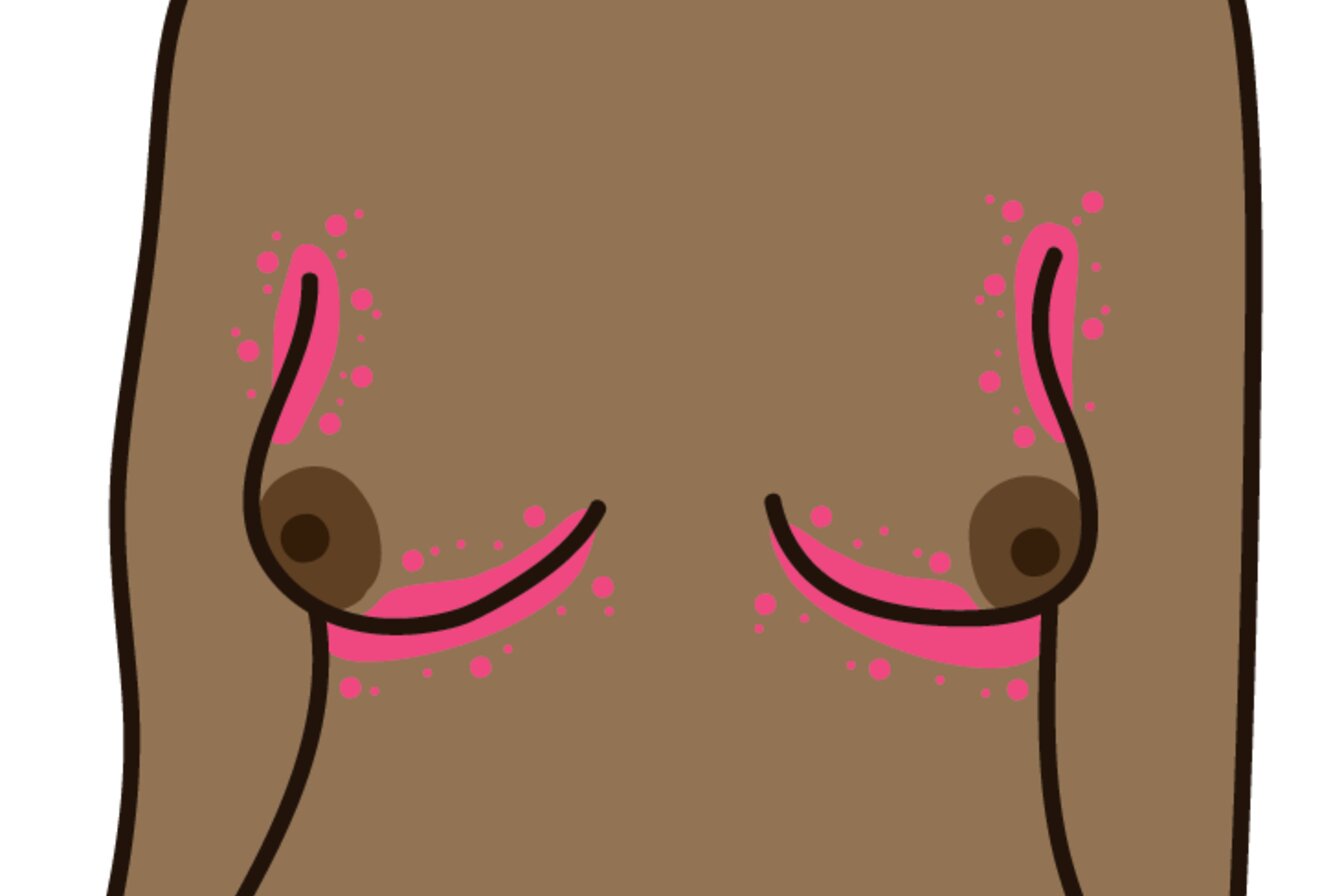
It's a very common condition that can affect anyone at any age. But it can be more common in women who have larger breasts or who are more physically active.
You may hear it called candida intertrigo.
An itchy red or reddish-brown rash under the breast or between the folds of skin is one of the most common symptoms of intertrigo.
Intertrigo can affect one or both breasts or armpits.
Other symptoms of intertrigo include:
Symptoms can be mild, moderate or severe. For some people, intertrigo can affect their quality of life.
The main causes of intertrigo are:
Intertrigo can lead to fungal or bacterial infections.
Intertrigo can happen anywhere on the body where skin rubs against skin, such as between the thighs, the underside of the belly or the armpits.
If you think you have intertrigo, speak to your GP or pharmacist. There are other skin conditions that look similar.
How the rash is treated depends on how severe it is and what’s causing it.
Treatment aims to:
Your GP or pharmacist may suggest treatments such as:
Speak to your GP or pharmacist about which treatment is best for you.
Intertrigo can be long-term and can come back.
There are some simple things you can do to reduce your risk of getting intertrigo and stop any irritation from getting worse.
If you would like more information and support or just want to talk things through, our nurses are ready to listen on our free helpline below.

If you have any concerns about breast cancer, or just want to talk, our specialist nurses are here for you.
Lines open: Monday to Friday - 9am to 4pm; Saturday - 9am to 1pm
It can be difficult to talk to someone in person about breast cancer concerns. Explore other ways you can ask a question.